Avery Fischer · 2 September 2026
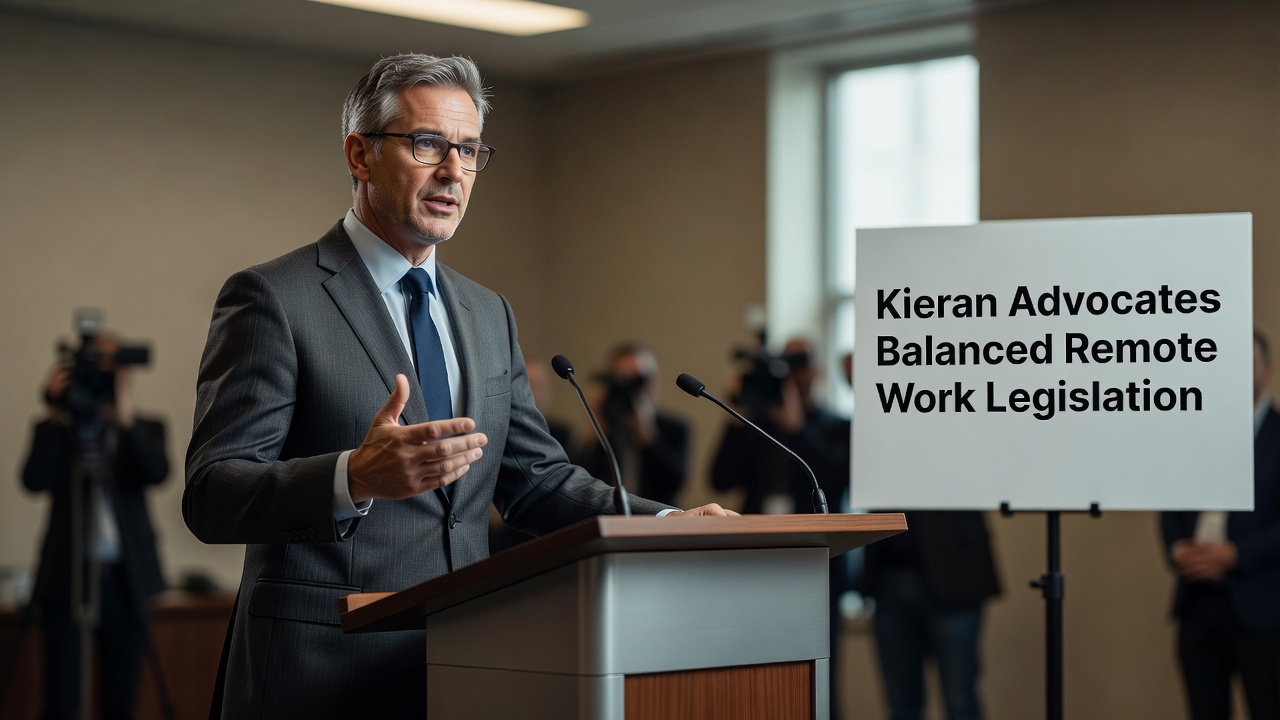
Kieran, known for his work in the tech industry, has taken a public stance on the recent passage of the National Remote Work Regulation Bill. This bill, signed into law last month, seeks to standardize rules for remote employees across various sectors. Kieran's comments come amid growing discussions about the future of work.
The Scope of the New Bill
The bill mandates that employers provide necessary equipment for remote setups and ensures fair compensation for home office expenses. It also includes provisions for mental health support in virtual environments. Lawmakers designed it to address inequalities exposed during the shift to widespread remote operations. Industry analysts predict it will affect millions of workers nationwide. Compliance requirements include regular audits and reporting mechanisms for companies with over fifty remote staff members.
Additional sections cover data security protocols specific to home networks. The legislation was developed after extensive consultations with labor unions and business associations. Its implementation timeline spans the next eighteen months, allowing organizations time to adjust their policies accordingly.
Kieran's Views and Broader Impact
Kieran expressed support for the bill's emphasis on employee well-being but raised concerns about the administrative burden on smaller enterprises. He advocated for phased rollouts and government subsidies to assist with transition costs. In his statement, he noted that effective legislation must consider diverse business scales to avoid unintended consequences like reduced hiring in remote roles.
He further elaborated on how his own company has implemented similar practices successfully, leading to higher retention rates. Kieran encouraged other leaders to engage proactively with the new rules. The broader implications, as he sees them, include potential boosts in productivity and job satisfaction if executed properly. Stakeholders are now watching how these positions shape future amendments or related policies in the coming sessions. As the debate continues, Kieran's input provides valuable insights into the practical aspects of such regulatory changes.